A homeowner handoff shouldn't start the week before closing. By then, the most useful information about a home has already been created throughout construction. Plans have changed, materials have been installed, decisions have been approved, and important details have been covered up behind walls.
For home builders, keeping track of that information as the project progresses makes the final handoff easier and gives homeowners something valuable: a reliable record of how their home was built and how to care for it.
Good homeowner handoff documentation also supports the builder's team after move-in. When product details, warranty information, photos, and project decisions are organized in one place, responding to homeowner questions and service requests becomes much easier.
Here's what builders should be documenting today to support tomorrow's homeowner.

1. Keep a Record of Final Plans and Specifications
Plans and specifications are the foundation of a home's project record. But the original set of plans doesn't always reflect what was ultimately built.
During construction, revisions happen. Dimensions change, products get substituted, and details are updated to accommodate field conditions. If those changes aren't captured and organized, homeowners may end up with outdated information about their own home.
Builders should keep a record of the final, approved versions of important project documents, including:
- Final architectural and structural plans.
- Updated electrical, plumbing, and mechanical plans.
- Final specifications and scope of work.
- Approved plan revisions and addenda.
- Relevant permits, inspection records, and approvals.
- As-built documentation, when available.
The goal is to give homeowners an accurate reference, not a folder full of outdated versions. Keeping final documents organized also helps the builder's team answer questions later without searching through old emails or project folders.
A home's documentation should tell the story of the entire build, not just reflect the original plans. From the first set of drawings to the final walkthrough, every revision, approval, and project detail contributes to that history. Learn more about creating a complete record of the home, from first plans to final walkthrough.
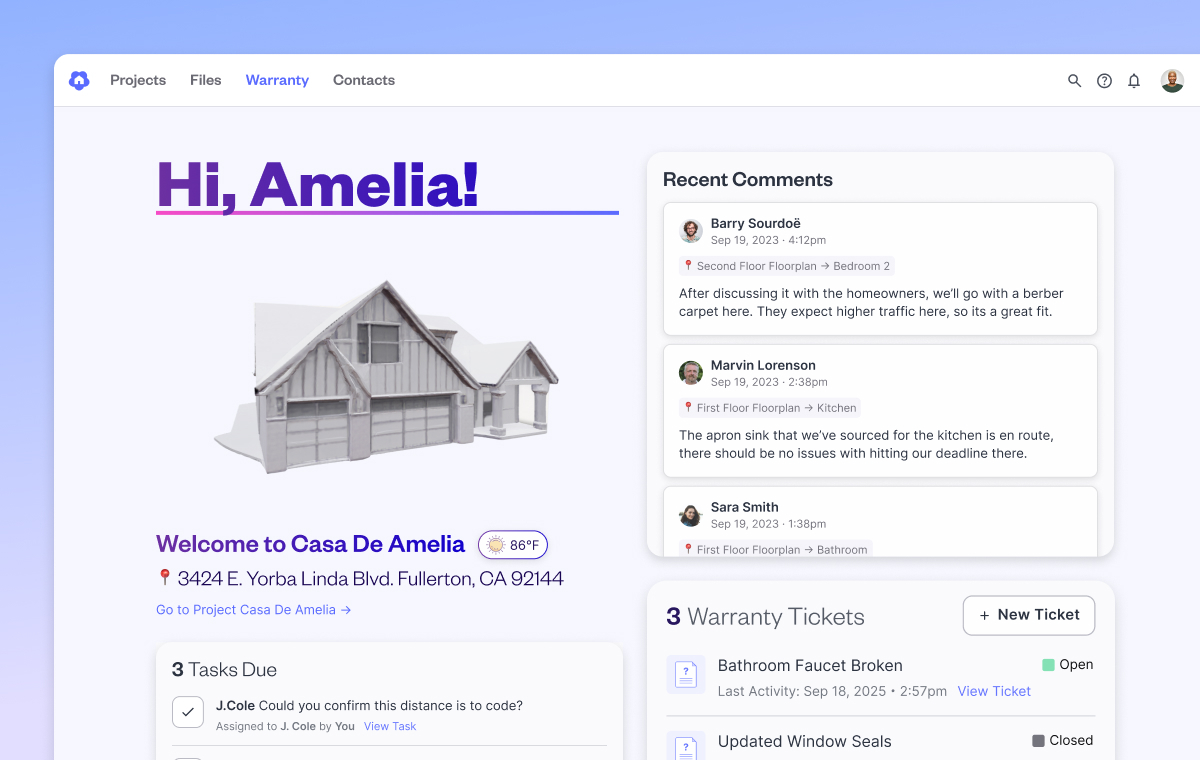
2. Document Selections and Installed Products
Homeowners will eventually have questions about the products and materials used throughout their home. They may want to replace a faucet, match a paint color, find a flooring product, or understand which HVAC filter to purchase.
Without a clear record, finding those details can turn into a guessing game.
Builders should document the products and finishes selected and installed in each home. Useful information includes:
- Manufacturer and product names.
- Model and serial numbers, when applicable.
- Paint colors and finishes.
- Flooring, countertop, cabinet, and tile selections.
- Appliance details and installation information.
- Plumbing fixtures, lighting, and hardware.
- Product specifications and care instructions.
Whenever possible, include photos of installed products and links to manufacturer information. A photo of a product label or model number can save time when a homeowner needs a replacement part or submits a warranty request.
This information is especially useful when a product is discontinued or a homeowner needs to identify an exact match years after move-in.

3. Photograph What's Behind the Walls
Some of the most valuable details about a home become inaccessible once construction is complete.
Before drywall, flooring, insulation, or other finishes cover important systems, builders have an opportunity to create a visual record of what's underneath.
Photos taken during construction can help homeowners and future service professionals understand where key components are located. They can also provide useful context when planning renovations or investigating an issue.
Consider documenting:
- Plumbing lines and water shutoff locations.
- Electrical wiring, panels, and junction boxes.
- HVAC ductwork, equipment, and ventilation.
- Framing, blocking, and structural details.
- Insulation and waterproofing.
- In-wall backing and other concealed features.
- Utility connections and relevant access points.
Photos should be clear, organized, and labeled with the room or location. A collection of hundreds of unlabeled jobsite photos won't be very helpful years later.
Capture images at meaningful construction milestones and connect them to the correct room, area, or project phase. That way, homeowners and service teams can find the information they need without sorting through an entire camera roll.

4. Organize Warranties, Manuals, and Maintenance Information
A home comes with a lot of information that homeowners need after closing. Product warranties, equipment manuals, maintenance instructions, and service contacts all play a role in keeping the home in good condition.
When homeowners can't find important house documents, even simple maintenance questions can become frustrating. Missing manuals, warranty information, and product details can make it harder to care for a home. Here's what happens when homeowners can't find their house documents, and why keeping that information accessible matters.
Builders should collect and organize:
- Builder warranty information and coverage details.
- Manufacturer warranties for installed products and equipment.
- Appliance and equipment manuals.
- Recommended maintenance schedules.
- Filter sizes and replacement instructions.
- Manufacturer and service provider contact information.
- Instructions for operating major home systems.
A clear maintenance record can also help homeowners understand what needs attention and when. For example, knowing the HVAC filter size and recommended replacement schedule makes routine upkeep easier.
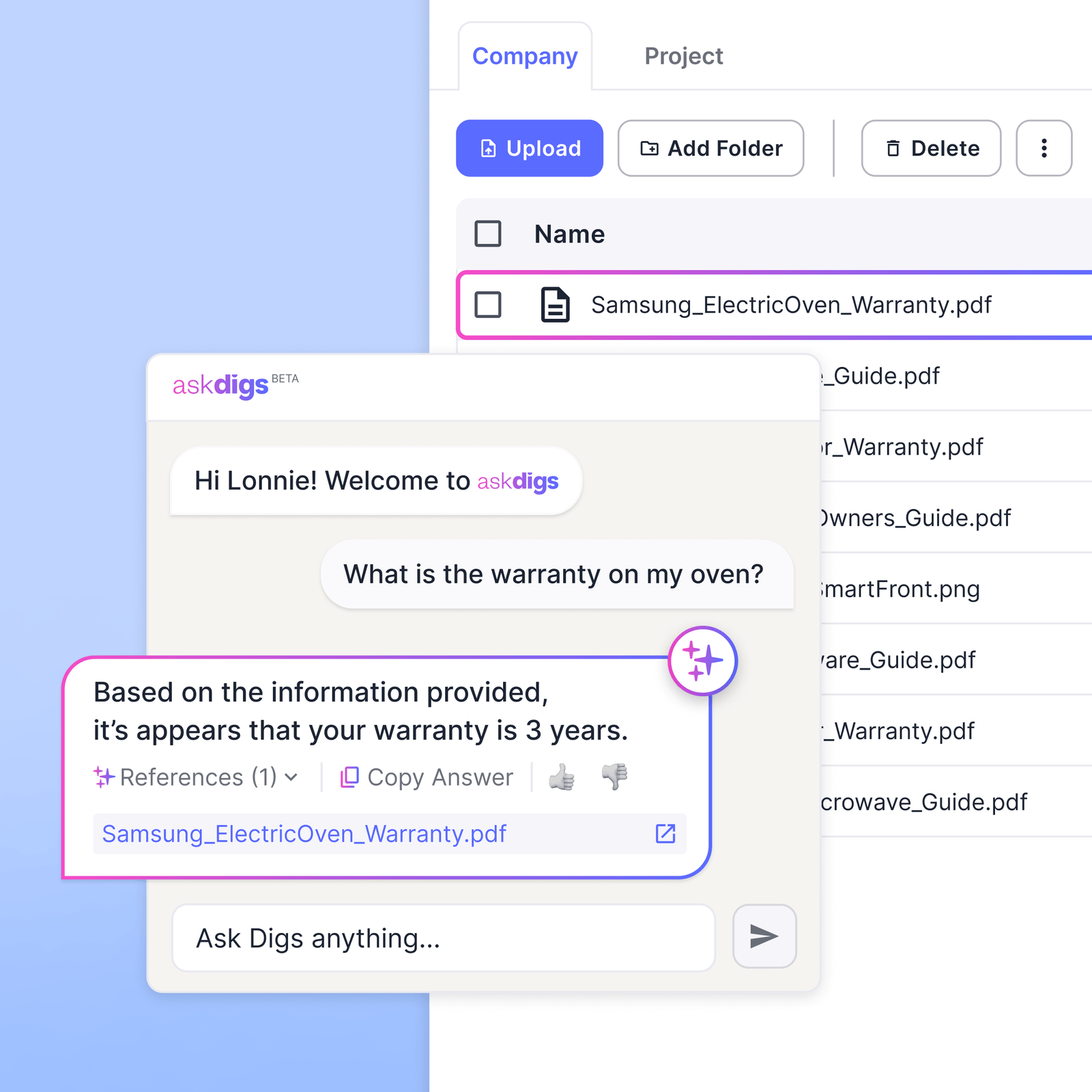
The handoff should make it clear where homeowners can find warranty information, how to submit a request, and who to contact with questions. Providing the documents is important. Making them easy to access is just as important.
5. Track Change Orders and Approved Decisions
A home's final condition is shaped by hundreds of decisions made throughout the building process. Some are planned from the beginning. Others happen because of product availability, field conditions, or homeowner requests.
Those decisions need a clear record.
If a homeowner asks why a fixture looks different from the original selection or wants to know when a particular change was approved, the builder should be able to find the answer.
Keep documentation of:
- Approved change orders.
- Material and product substitutions.
- Homeowner selection changes.
- Plan revisions and updated specifications.
- Relevant approvals and sign-offs.
- Important project communications and decisions.
Make sure the final project record reflects what was actually approved and installed. This helps prevent confusion between the original plans, later revisions, and the completed home.
It also gives the builder's team useful context when handling warranty questions or service requests after move-in.
6. Create a Complete Homeowner Handoff Package
A strong homeowner handoff brings all of this information together in a format that's easy to understand and use.
Instead of waiting until the end of construction to gather documents, builders can make documentation part of their project workflow. Each team member captures relevant information as work is completed, keeping the home record current along the way.
Use this checklist to organize the information homeowners should receive.
Plans and Project Information
- Final approved plans and relevant revisions.
- Final specifications.
- Available as-built documentation.
- Relevant permits, inspection records, and approvals.
Products and Materials
- Appliance and equipment details.
- Product names, manufacturers, and model numbers.
- Paint colors and finish selections.
- Flooring, countertop, cabinet, and fixture information.
- Product manuals and care instructions.
Construction Records
- Photos of plumbing, electrical, framing, and other concealed work.
- Photos of key construction milestones.
- Relevant installation and inspection documentation.
- Records of approved changes and substitutions.
Warranties and Maintenance
- Builder warranty information.
- Manufacturer warranties.
- Equipment manuals.
- Maintenance recommendations and schedules.
- Filter sizes and replacement instructions.
- Service contacts and warranty request instructions.
Final Walkthrough
- Completed walkthrough documentation.
- Outstanding items and their resolution.
- Homeowner instructions for major systems.
- Access information for relevant homeowner resources.
Not every home or project will require the same documents. The goal is to create a complete, accurate record that reflects the home as it was built and gives the homeowner a practical resource for the years ahead.

7. Make Home Construction Documentation Part of Your Process
The best time to organize a home's documentation is while the work is happening, not after the project is finished.
When teams rely on individual inboxes, paper folders, personal photo libraries, and disconnected software, important information can get lost. Even when the documentation exists, finding the right version or sharing it with the homeowner can take more time than it should.
A consistent documentation process helps builders:
- Keep project information organized and accessible.
- Reduce time spent tracking down documents and answers.
- Give homeowners a more complete record of their home.
- Make warranty and aftercare requests easier to manage.
- Support communication between the builder's team, trades, and homeowners.
Digital home documentation makes this process easier to maintain. Instead of handing over a collection of disconnected files, builders can give homeowners access to an organized record that stays useful long after closing.
The homeowner handoff is more than the final step in construction. It's the beginning of the homeowner's experience with the home, and the quality of that experience depends on the information the builder leaves behind.

Frequently Asked Questions
What documents should builders give homeowners at closing?
Builders should provide final plans and specifications, product and appliance information, warranty documents, equipment manuals, maintenance instructions, and relevant construction records. The handoff should also explain how homeowners can contact the builder and submit warranty or service requests.
Why is construction documentation important after move-in?
Construction documentation gives homeowners and service professionals a reference for how the home was built. Photos of concealed systems, product details, approved changes, and final plans can help answer maintenance questions, support repairs, and provide context for future renovations.
Should builders provide digital home documentation?
Digital documentation gives homeowners an organized way to access important home information after closing. It can make plans, product details, warranties, manuals, and construction photos easier to find than information stored across paper folders, emails, and separate file locations.
When should builders start preparing homeowner handoff documents?
Builders should start documenting a home during preconstruction and continue throughout the build. Capturing selections, revisions, installation details, and construction photos as work happens reduces the amount of information the team needs to track down at closing.
Digs is an AI-powered collaboration software built for homebuilders. From pre-con to aftercare, it keeps your team, trades, and clients aligned with one centralized workspace for decisions, documentation, digital handoff, and ongoing warranty support.
Unlock a happier home at Digs.com