Technology has transformed construction over the last decade.
Builders have more software than ever to help estimate projects, manage schedules, coordinate trades, communicate with teams, organize documents, and track financials.
But there's a growing problem.
Construction companies aren't struggling because they lack technology. They're struggling because their technology doesn't work together.
Instead of creating efficiency, many software stacks have created disconnected workflows, duplicate information, and endless searching for the latest project details.
At Digs, we believe the future of construction isn't about adding another app. It's about connecting the tools and information builders already rely on.
That perspective is backed by the data.
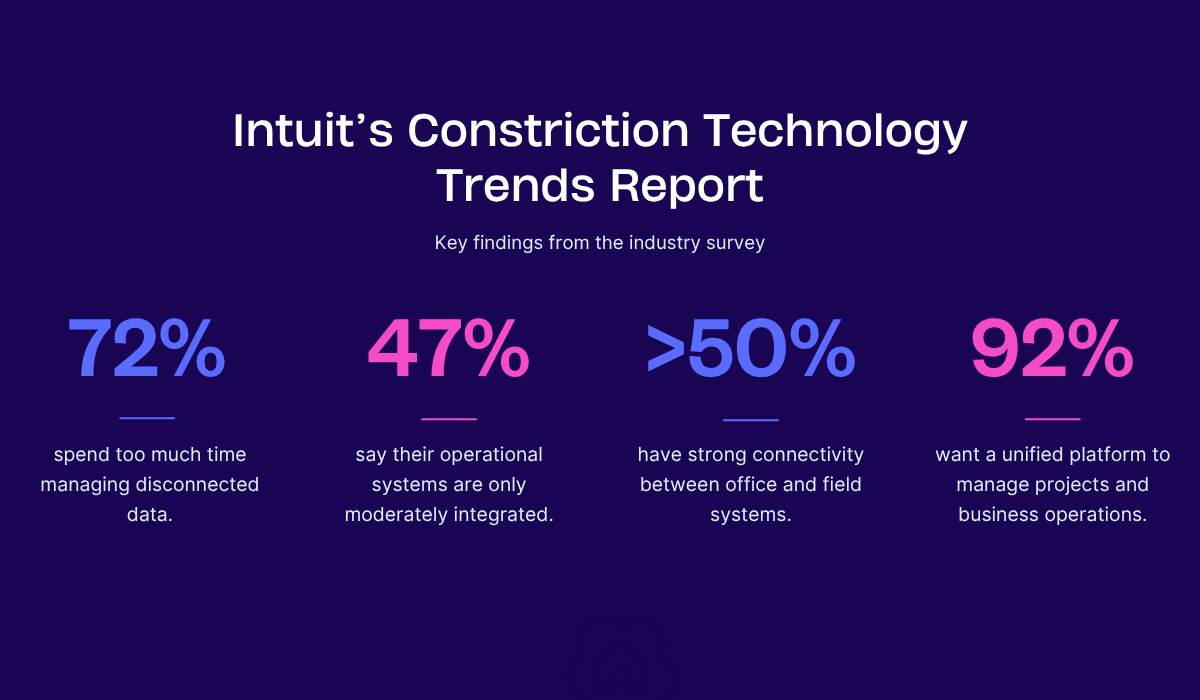
According to Intuit's Construction Technology Trends Report, 72% of construction firms spend too much time managing data because of disconnected technology, while 92% say they want a single, integrated platform to manage both construction projects and business operations.
The industry's biggest technology challenge is no longer technology adoption. It's information fragmentation.
More Software Hasn't Made Construction Simpler
Construction companies continue investing heavily in technology.
Large firms expect to spend approximately $120,000 on technology improvements this year, yet they estimate that nearly 10% of that investment goes toward software that is only partially used or never used at all.
The problem isn't choosing the wrong software.
The problem is that every application creates another place where information lives.
Project details become scattered across:
- Estimating software
- Scheduling platforms
- Cloud storage
- Text messages
- Spreadsheets
- Financial systems
- Project management tools
Each platform may solve an individual problem, but together they often create a much larger one.
Every handoff between systems creates another opportunity for information to be duplicated, delayed, or lost.
The result isn't a lack of technology.
It's a lack of connected information.
"It gives the field team confidence. They're not wondering what's supposed to go in. They can see it right there on their phone." - Williams Contracting
The Hidden Cost of Disconnected Information
Disconnected systems don't just frustrate project teams.
They create measurable operational waste.
Every day, builders lose valuable time:
- Re-entering the same information across multiple platforms
- Searching for plans, specifications, and selections
- Working from outdated documents
- Waiting for answers from other teams
- Correcting mistakes caused by incomplete information
At Digs, we call this build chaos.
Build chaos isn't caused by people working inefficiently.
It's caused by information living in too many places.
Instead of building, teams spend valuable hours searching for documents, chasing updates, and confirming they have the latest information.
As projects become more complex, those small inefficiencies add up. The result is slower decisions, unnecessary rework, delayed schedules, and frustrated homeowners.
Why AI Isn't the Answer Yet
Artificial intelligence is quickly becoming one of construction's biggest technology investments.
But AI can't solve disconnected information.
AI is only as effective as the data it has access to.
If project knowledge is spread across disconnected systems, AI only sees part of the picture.
Teams still end up searching through folders, emails, PDFs, and spreadsheets because the information isn't connected.
That's why we believe builders should ask a different question.
Instead of asking, "How do we add AI?"
The better question is, "How do we connect our project information?"
Once information is centralized and connected, AI becomes dramatically more useful.
Rather than spending time hunting for documents or asking multiple people for answers, builders can simply ask a question and receive an immediate response backed by the project's complete history.
That is when AI starts creating real productivity gains.

Building a Connected Source of Truth
At Digs, we've taken a different approach.
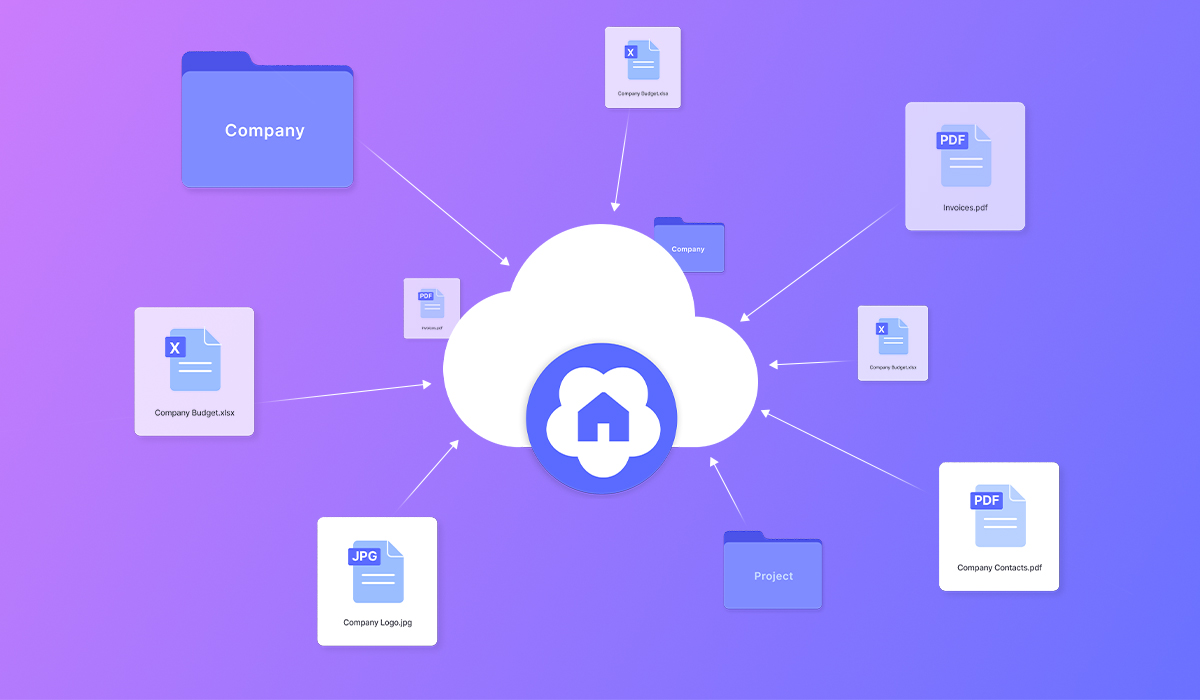
Rather than creating another point solution, we're building an AI-powered collaboration platform that connects every stage of the homebuilding process into a living digital record of each home.
That includes:
- AI that understands plans, specifications, selections, and construction documents
- One searchable location for every project document and conversation
- Built-in takeoffs, measurements, markups, scheduling, and collaboration
- Connected workflows from preconstruction through homeowner handoff, warranty, and long-term service
Instead of forcing teams to switch between disconnected applications, Digs brings project information together so every document, decision, and conversation is easy to find and understand.
The goal isn't to replace every tool builders already use.
It's to eliminate the friction between them.
Simplicity Is the Next Competitive Advantage
Construction companies will continue investing in technology.
The real question is whether they'll continue adding software or start simplifying it.
The builders creating the greatest operational efficiency aren't necessarily the ones with the largest technology budgets.
They're the ones reducing friction.
They're connecting people, documents, decisions, and project knowledge around a single source of truth.
When information is connected:
- Teams spend less time searching.
- AI delivers more accurate answers.
- Rework decreases.
- Collaboration improves.
- Homeowners receive a better experience long after construction is complete.
As Nathan Walters explains: "Construction is already so difficult. It's a breath of fresh air to have technology that is simplified and streamlined."
We believe that's where the industry is headed.
Not toward more software.
Toward better-connected software.
Because better construction doesn't come from adding more apps.
It comes from making every piece of project information accessible, connected, and understandable.
When that happens, AI becomes more powerful, teams become more productive, and homeowners receive a better experience from preconstruction through long-term homeownership.
See What Build Chaos Is Costing Your Business
Disconnected communication, scattered documents, duplicate work, and inefficient handoffs all have a measurable cost.
That's why we created the Home Builder ROI Calculator.
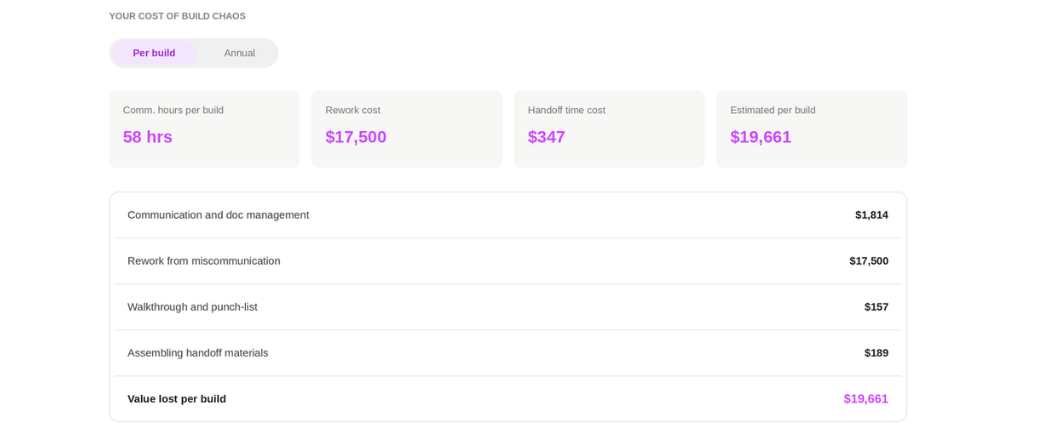
In less than a minute, you can estimate how much time and money build chaos may be costing your business and identify opportunities to improve efficiency across every project.
The future of construction isn't about managing more technology.
It's about making the technology you already use work together.
Digs is an AI-powered collaboration software built for homebuilders. From pre-con to aftercare, it keeps your team, trades, and clients aligned with one centralized workspace for decisions, documentation, digital handoff, and ongoing warranty support.
Unlock a happier home at Digs.com