For most builders, warranty calls arrive in waves.
A homeowner notices a loose handle. Another can't find the HVAC filter size. Someone else wants to know whether a small drywall crack is normal. None of these issues are unusual, but together they create a steady stream of interruptions for superintendents, customer care teams, and project managers.
The good news is that many warranty calls are preventable.
The builders with the lowest call volume are not necessarily building different homes. They are delivering a clearer handoff, documenting decisions, and giving homeowners answers before they need to pick up the phone.
Reducing warranty calls is not about avoiding service. It is about eliminating confusion, setting expectations, and making information easy to find.
The Real Cost of a Warranty Call
A single call rarely stays a single call.
Someone has to answer it, gather project details, search for documents, contact a trade partner, schedule a visit, and follow up with the homeowner. Even when no repair is needed, the administrative work still happens.
Multiply that by dozens or hundreds of homes and the hidden cost becomes significant.
Builders often focus on repair expenses, but the larger drain is usually time.

Why Homeowners Call
In our experience, warranty requests tend to fall into three categories:
1. Information Requests
These are questions such as:
- What paint color was used in the kitchen?
- Where is the appliance manual?
- What filter should I buy?
- Who installed the flooring?
No repair is needed. The homeowner simply cannot find the information.
2. Expectation Gaps
These are concerns that are often normal settling conditions:
- Minor drywall cracks
- Seasonal wood movement
- Concrete shrinkage cracks
- Small nail pops
If homeowners were prepared for these changes, many would never become warranty tickets.
3. Legitimate Defects
These are the calls you want to receive quickly because they require action.
The goal is not to reduce valid warranty claims. It is to reduce the first two categories so your team can respond faster to the third.
A Five-Step System That Actually Works
Step 1: Build a Better Handoff Package
Most builders already provide manuals and warranty paperwork. The problem is that the information is often scattered across folders, emails, and PDFs.
A modern handoff should include:
- Appliance manuals
- Paint colors and finish selections
- Trade partner contacts
- Warranty terms
- Maintenance schedules
- Filter sizes and replacement dates
- Care instructions for flooring, countertops, and fixtures
The key is not the amount of information. It is whether the homeowner can find it in 30 seconds.
Step 2: Set Expectations Before Move-In
One of the simplest ways to reduce call volume is to explain what is normal.
During the final walkthrough, show homeowners:
- Where seasonal cracks may appear
- How wood products respond to humidity
- What maintenance is their responsibility
- Which issues should be reported immediately
A short "What to Expect in the First Year" guide can prevent dozens of unnecessary calls.
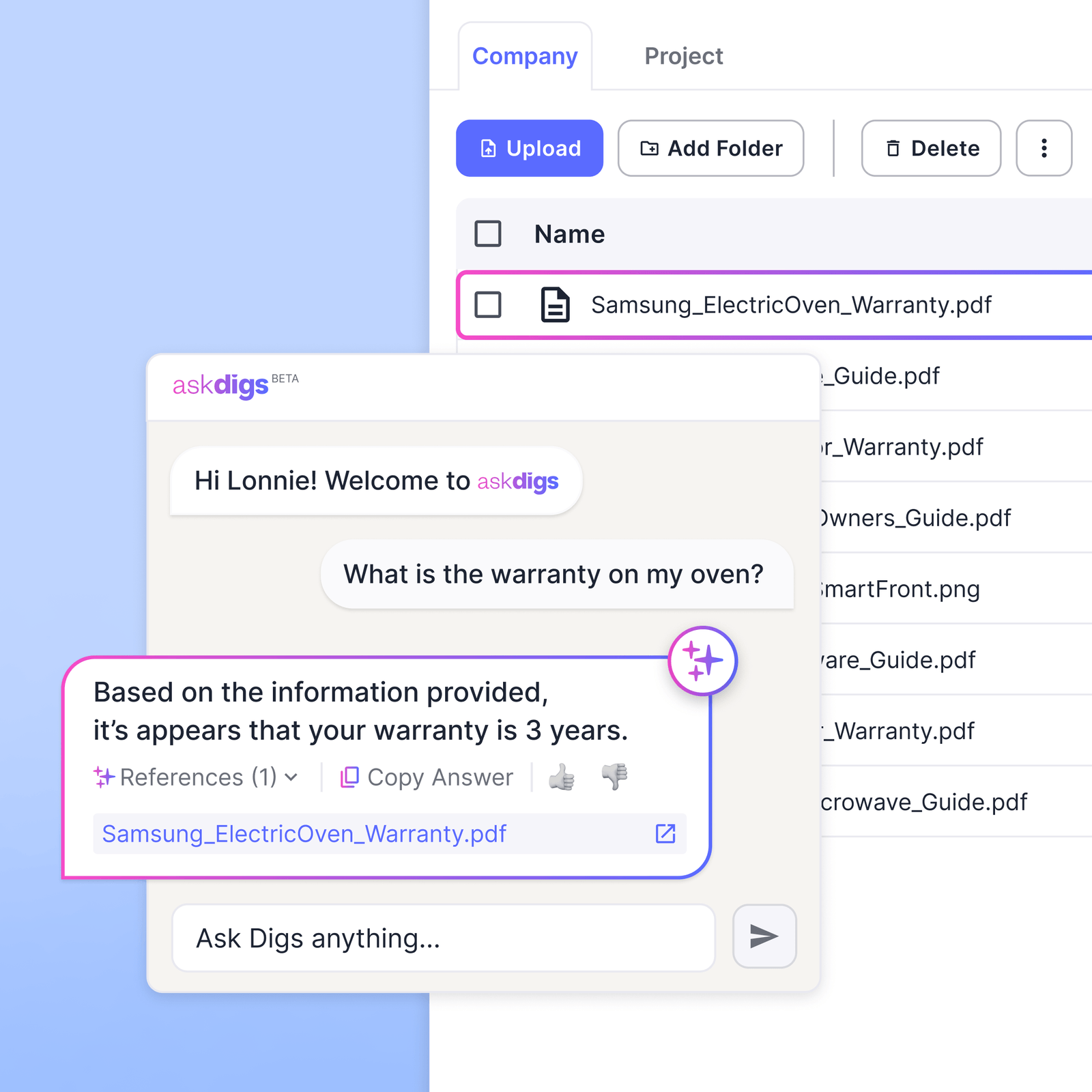
Step 3: Give Homeowners Self-Service Answers
Think about how people solve problems today. They search before they call.
If a homeowner can type "water heater model" or "paint color" into a searchable portal and get an instant answer, the phone never rings.
This is where centralized project documentation becomes powerful. When plans, selections, manuals, and warranty information live in one place, homeowners can help themselves.
Step 4: Standardize Your Warranty Intake
When a real issue does occur, make reporting it simple.
A good intake form asks for:
- The room or location
- Photos
- A short description
- Preferred contact information
This reduces back-and-forth and helps your team route the request to the right trade partner immediately.
Step 5: Close the Loop Fast
Speed matters.
According to industry research from Eliant, homeowners whose warranty requests are resolved quickly are significantly more likely to recommend their builder than those who experience delays. In fact, top-performing builders see referral willingness reach as high as 98% when warranty issues are handled efficiently.
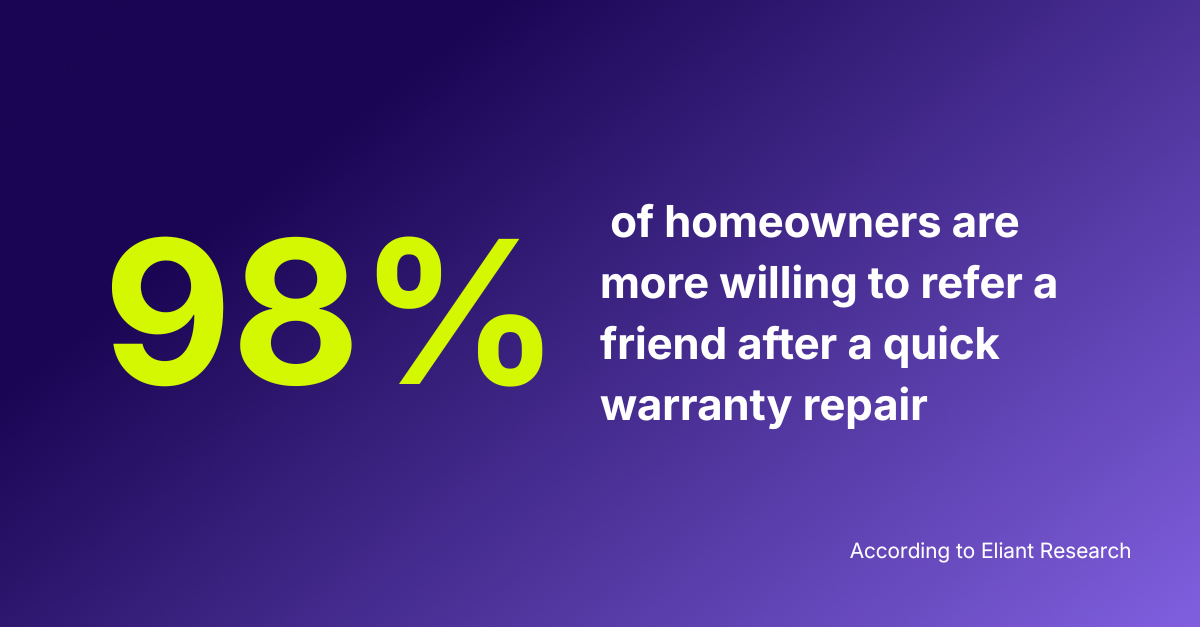
Fast resolution protects both customer satisfaction and future referrals.
Reducing unnecessary calls gives your team more capacity to respond quickly to the issues that truly matter.
The 80/20 Opportunity
Many builders discover that a small number of topics generate most of their calls.
Start by tracking requests for 60 days. You may find that:
.png)
If one question appears 20 times, solve it once in the handoff process instead of answering it 20 times later.
What This Looks Like in Practice
Imagine a homeowner notices a small wall crack six months after move-in.
Without a clear handoff:
- They call the builder.
- The office creates a ticket.
- A superintendent visits the home.
- The team determines it is normal settling.
With a clear handoff:
- The homeowner opens a first-year expectations guide.
- They compare the crack to the examples provided.
- They monitor it or submit a photo if it exceeds the stated threshold.
Same home. Same condition. Completely different workload.
The Metrics to Watch
To measure progress, track:
- Warranty calls per home
- Percentage of information-only requests
- Average response time
- Average time to resolution
- Homeowner satisfaction after service
The goal is not zero calls. The goal is fewer unnecessary calls and faster resolution for legitimate issues.
The Role of Technology
As builders grow, managing warranty information manually becomes increasingly difficult.
Homeowners expect answers on demand, while teams need easy access to project records, selections, manuals, and warranty history. When information is scattered across inboxes, shared drives, and filing cabinets, even simple questions can consume valuable time.
Platforms like Digs help builders centralize project information from pre-construction through warranty and aftercare, giving both homeowners and builder teams a single source of truth. Instead of searching for answers, teams can focus on delivering a better homeowner experience.
.png)
The Bottom Line
The easiest warranty call to manage is the one that never needs to happen.
Builders reduce call volume when they:
- Deliver a complete, searchable handoff.
- Set clear first-year expectations.
- Give homeowners self-service access to information.
- Standardize warranty intake.
- Resolve real issues quickly.
The result is less administrative work, faster service, happier homeowners, and a customer care team that can focus on the problems that truly require attention.
That is not just a warranty strategy. It is a better homeowner experience.
Digs is an AI-powered collaboration software built for homebuilders. From pre-con to aftercare, it keeps your team, trades, and clients aligned with one centralized workspace for decisions, documentation, digital handoff, and ongoing warranty support.
Unlock a happier home at Digs.com