Artificial intelligence is quickly moving from buzzword to jobsite reality. For builders, the conversation is no longer about whether AI matters, but how to use it in ways that actually improve projects, margins, and client experience. “According to a survey from the Dodge Construction Network, 51% of contractors are actively evaluating multiple AI initiatives across their teams, while 40% have already set aside a dedicated AI budget.” Read more here.
The opportunity is real, but so is the noise. Here are five things every builder should understand right now.
1. AI is a tool, not a replacement
AI will not replace builders, project managers, or trades. What it will do is eliminate repetitive tasks, reduce human error, and surface insights faster. The builders who win will be the ones who use AI to enhance their teams, not try to substitute them. The real shift is giving every role better access to the right information at the right time.

2. The biggest gains are in everyday workflows
The most impactful use cases are not flashy. They show up in places like takeoffs, document organization, change order tracking, and warranty management. Small efficiencies across these workflows compound quickly, saving hours per project and reducing costly mistakes. We’re seeing AI become most valuable when it’s embedded directly into the tools and processes builders already rely on.
3. Data is your biggest asset, if you can actually use it
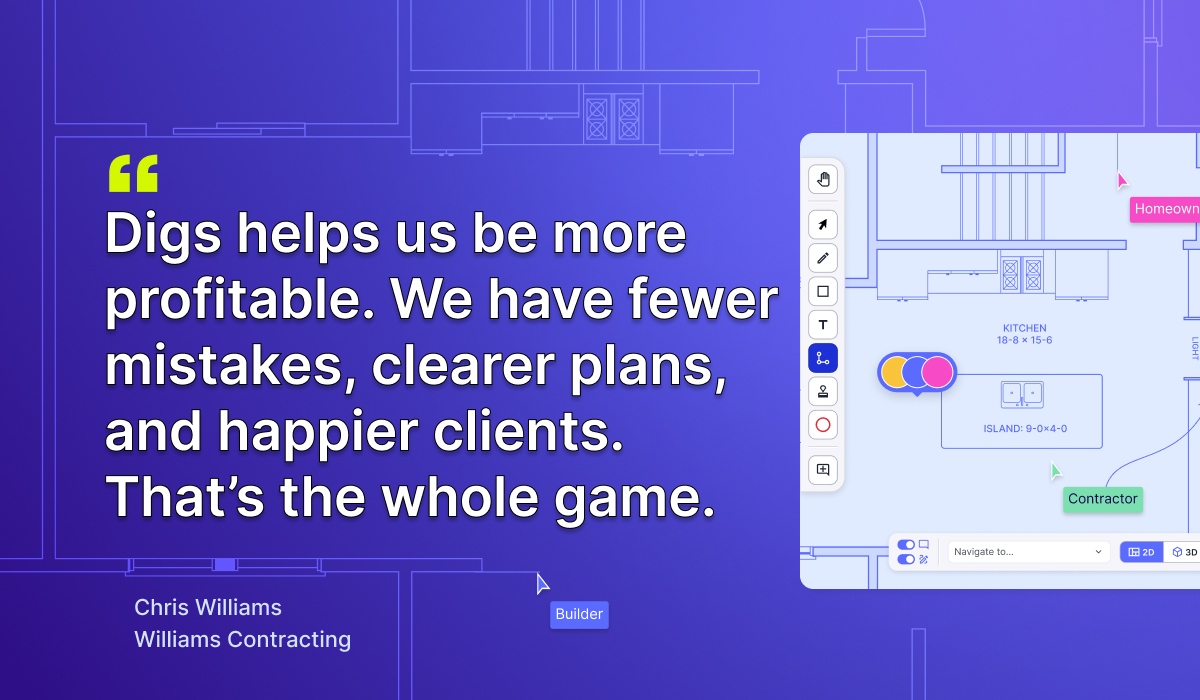
AI is only as powerful as the information it can access. Builders are sitting on years of plans, selections, specs, and client communication, but much of it is unstructured and underutilized. The real opportunity is turning that fragmented information into something usable across every phase of the build.
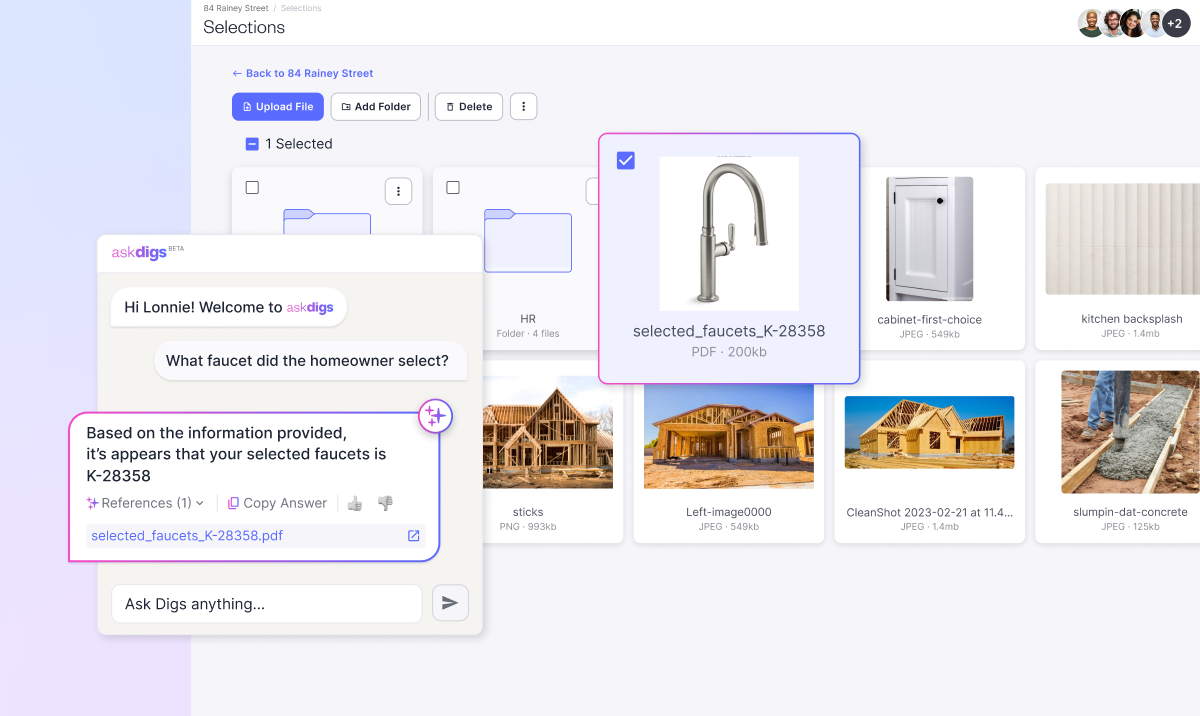
This is where we’re seeing a major shift. Forward-thinking builders are moving toward a single source of truth, where data is centralized, connected, and accessible to everyone involved. At Digs, this is foundational. By structuring and connecting project data from pre-build through aftercare, Digs AI can surface insights, answer questions, and support decision-making in ways that weren’t previously possible.
4. Breaking down silos is where AI starts to compound
One of the biggest challenges in construction isn’t a lack of data, it’s that the data lives in different places across teams, tools, and phases of the project. Estimating, design, construction, and warranty often operate in silos, creating gaps, delays, and miscommunication.
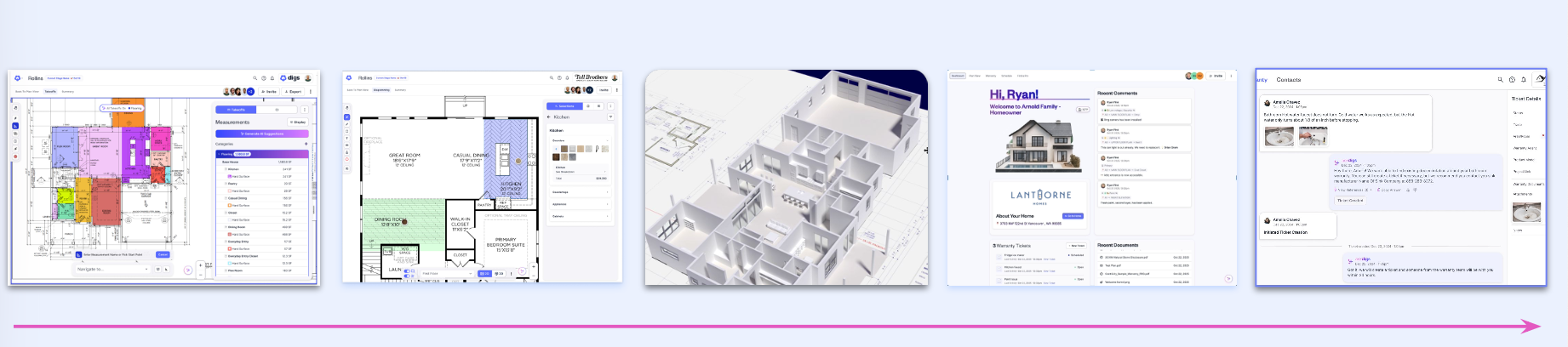
AI becomes significantly more powerful when those barriers are removed. When everyone is working from the same shared context, teams move faster, make better decisions, and reduce risk. A connected system allows information to flow seamlessly, so what happens in pre-build informs construction, and what happens during the build carries through to the homeowner experience.
5. Adoption doesn’t have to be overwhelming
You don’t need to overhaul your entire tech stack overnight. Start small. Identify one or two friction points in your process and explore how AI can improve them. The builders seeing the most success are taking a phased approach, learning as they go, and scaling what works.
The key is choosing tools and partners that don’t just add more technology, but actually simplify how your team works by bringing information together, not spreading it further apart.
AI in construction is still early, which means there is a window of opportunity. Builders who take the time to understand it now will be better positioned to operate more efficiently, deliver a stronger client experience, and stay competitive as the industry evolves.
Today, AI is not just an operational advantage, it is a business advantage. Builders are using it to deliver a more modern, transparent client experience, win more work through better communication and differentiation, and reduce time and cost on the job site by minimizing errors and inefficiencies. Those who embrace it now are not just building better homes, they are building stronger, more resilient businesses.
Digs is an AI-powered collaboration software built for homebuilders. From pre-con to aftercare, it keeps your team, trades, and clients aligned with one centralized workspace for decisions, documentation, digital handoff, and ongoing warranty support.