Construction Should Be Data-Rich. So Why Is It So Hard to Manage?
Construction should be one of the most data-rich industries in the world. Every project generates thousands of pages of plans, RFIs, submittals, change orders, photos, selections, schedules, warranty records, and homeowner communications.
Yet most builders still struggle with a simple reality: the data exists, but it is not usable when it matters.
The issue is not a lack of information. The real challenge is context.
Builders often have the information they need, but not the surrounding details that make that information actionable. A floor plan, specification sheet, warranty request, or project photo only becomes valuable when teams can quickly understand where it belongs, why it matters, and how it connects to the rest of the project.
The problem is not that construction lacks data. The problem is that information becomes fragmented, disconnected, and difficult to understand across the lifecycle of a build.
Understanding why construction data is so difficult to manage is the first step toward fixing it.

1. Construction Data Starts Unstructured and Stays That Way
Most industries begin with structured data entry. Construction does not.
A typical project includes:
- PDFs of plans and revisions
- Email threads with decisions buried inside
- Spreadsheets tracking selections or budgets
- Text messages with site updates
- Photos stored in phone galleries or shared drives
- Handwritten markups scanned and re-uploaded
None of this information is naturally structured. It is created for communication, not for computation.
That means construction data is often:
- Inconsistent
- Difficult to search
- Hard to connect across systems
- Nearly impossible to standardize without extra work
Even when teams attempt to organize information, they are often doing so after the fact rather than at the moment it is created.
2. Data Is Scattered Across Too Many Tools and People
A single home build can involve dozens of stakeholders:
- Builders
- Architects
- Engineers
- Subcontractors
- Designers
- Homeowners
Each group uses different tools and communication channels.
Some information lives in project management software. Some lives in email. Some lives in cloud storage. Some never leave a superintendent's phone.
The result is fragmentation.
When information is spread across multiple systems, no true single source of truth exists. Teams are forced to search across platforms, rely on memory, or repeatedly ask others for information that should already be accessible.
This is where costly mistakes begin.

3. Version Control Is a Constant Challenge
Few industries deal with revisions as frequently as construction.
Plans change. Specifications change. Materials change. Layouts evolve throughout the build process.
Managing those changes becomes difficult when:
- Files are duplicated instead of updated
- Naming conventions vary from project to project
- Teams reference outdated drawings
- Field and office teams are working from different versions
A small versioning mistake can have major consequences, from ordering incorrect materials to building from outdated plans.
Even when version control systems exist, they often rely on manual processes that can break down under real-world project pressure.
4. Construction Data Loses Value When Context Disappears
Context is what transforms information into understanding.
Builders rarely struggle because information does not exist. They struggle because information becomes disconnected from the decisions, locations, people, and timelines that give it meaning.
A tile selection alone is not enough. Teams also need to know:
- Which room it belongs to
- Which revision it was selected under
- Who approved it
- When it was approved
- Whether it changed after ordering
- How it connects to adjacent finishes and materials
Without that context, information loses value.
Teams spend countless hours reconstructing answers from disconnected files, conversations, and records. Information exists, but understanding does not.
5. Construction Teams Spend Too Much Time Looking for Information
One of the hidden costs of fragmented data is search time.
Project teams often know the information exists somewhere. The challenge is finding it quickly.
A superintendent may spend valuable time searching through emails for a specification. A project manager may jump between folders trying to verify the latest drawing revision. Warranty teams often revisit months-old conversations to understand why a decision was made.
The problem is not missing information.
The problem is that information is not connected, searchable, or presented in context.
As project complexity increases, the time spent searching for answers becomes a growing source of inefficiency.
6. Communication Becomes the Default Database
When systems fail to organize information effectively, communication tools take over.
Emails, texts, phone calls, and meetings become the primary record of truth.
This creates several challenges:
- Important decisions become buried in long threads
- Information is difficult to search
- Accountability becomes unclear
- New team members struggle to get up to speed
- Critical project knowledge depends on individual follow-up
Over time, communication overload replaces data clarity.
Instead of asking, "What is the correct answer?" teams begin asking, "Where did we talk about this?"
7. Construction Data Is Highly Visual but Rarely Digitized Correctly
Construction is inherently visual.
Projects rely on:
- Floor plans
- Elevations
- Site photos
- Markups and redlines
- Renderings and 3D models
Yet much of this visual information remains trapped inside static files.
A floor plan PDF may contain dozens of critical project decisions, but none of them are searchable. A photo documenting a framing issue may be useful in the moment, but becomes disconnected from the issue it was meant to capture.
This creates a gap between seeing the project and understanding the project.
8. Critical Project Knowledge Lives in People's Heads
Because systems are fragmented, much of a project's knowledge remains dependent on individuals.
Superintendents remember what was decided. Project managers remember the email chain. Designers remember conversations with homeowners.
While experience is valuable, relying on memory is risky.
Problems emerge when:
- Team members leave
- Businesses grow
- Multiple projects run simultaneously
- New stakeholders join a project
Without systems that capture and organize decisions, project knowledge becomes difficult to scale.
The most successful builders are not the ones who know the most. They are the ones who make knowledge accessible to everyone who needs it.
9. The Cost of Bad Data Shows Up Late
One of the most frustrating aspects of poor construction data management is timing.
Data issues rarely create immediate problems.
Instead, they surface later as:
- Rework
- Change orders
- Warranty claims
- Scheduling delays
- Budget overruns
- Homeowner frustration
By the time the problem becomes visible, the original source may be buried inside weeks or months of disconnected information.
This delay makes root-cause analysis difficult and often leads teams to treat symptoms instead of solving the underlying issue.
10. Why Construction Data Management Matters More Than Ever
The industry is reaching a tipping point.
Several trends are making construction data management impossible to ignore:
- Increasing project complexity
- Labor shortages
- Rising homeowner expectations
- Faster project timelines
- Greater adoption of digital tools and AI
Artificial intelligence is accelerating this shift.
AI can help teams find answers faster, automate workflows, and surface project insights. But AI is only as effective as the data behind it.
If information remains fragmented and disconnected, AI cannot unlock its full value.
The future of construction is not simply digital. It is structured, connected, searchable information that follows the project from start to finish.
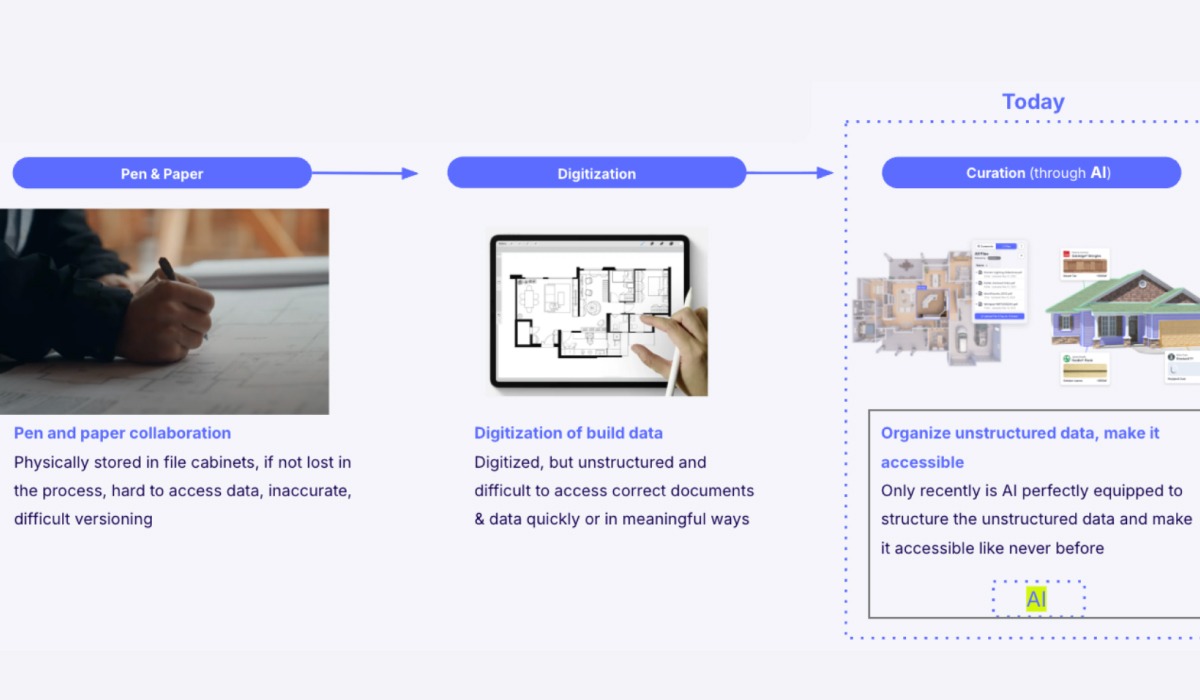
The Shift Toward Connected Construction Data
The solution is not simply adding more software.
The solution is creating better-connected data.
That means:
- Capturing information when it is created
- Linking decisions to specific project elements
- Maintaining version control automatically
- Making visual information searchable
- Creating a true single source of truth across teams
Platforms like Digs are built around this approach.

Rather than treating plans, photos, selections, warranty records, and communications as separate files, Digs connects them to the digital twin of the home. Every document, decision, and conversation is tied back to the specific spaces, systems, and components it relates to.
This allows builders to move beyond storing information and start understanding it.
With AI-powered search through AskDigs, visual project context, and a connected record that follows the home from pre-construction through warranty and aftercare, teams can find answers faster, reduce costly mistakes, and spend less time chasing information.
The goal is not simply storage.
The goal is understanding.
Construction data is difficult to manage because it was never designed to be managed. It was designed to be communicated.
But modern building requires more than communication. It requires continuity, context, and connected intelligence across every phase of the project lifecycle.
The builders who solve this challenge will not just reduce errors or save time. They will fundamentally change how projects are delivered, transforming fragmented information into a deeper understanding of every home they build.
Frequently Asked Questions About Construction Data Management
Why is construction data difficult to manage?
Construction data is difficult to manage because it is created across multiple formats including PDFs, emails, spreadsheets, photos, text messages, and project management systems. This fragmentation makes information difficult to search, track, and connect throughout a project lifecycle.
What causes construction data fragmentation?
Construction projects involve many stakeholders using different tools and communication channels. Information becomes fragmented when plans, specifications, approvals, communications, and documentation are stored separately rather than connected within a single system.
How does poor data management affect builders?
Poor construction data management can lead to rework, change orders, warranty issues, scheduling delays, budget overruns, and reduced homeowner satisfaction. Many of these issues stem from teams being unable to quickly access accurate project information.
What is a single source of truth in construction?
A single source of truth is a centralized system where project documents, decisions, communications, and records are connected and accessible to all stakeholders. It helps ensure everyone is working from the same information throughout the build process.
How can AI improve construction data management?
AI can help builders search project documentation, surface relevant information, identify relationships between files, and answer questions faster. However, AI works best when construction data is structured, connected, and organized within a unified system.