The right equipment can help your construction business take on larger projects, improve productivity, and keep schedules moving. But purchasing heavy machinery requires a significant investment, and tying up too much cash in equipment can limit what you have available for day-to-day operations.
Construction equipment financing gives builders and contractors several ways to acquire the machinery they need without putting unnecessary pressure on working capital. From equipment loans and leasing to short-term rentals and SBA-backed financing, the right option depends on how often you'll use the equipment, how long you'll need it, and what your business can afford.
Here's a closer look at six construction equipment financing options and how to decide which makes the most sense for your business.
1. Equipment Loans: Finance Equipment You Plan to Own
An equipment loan allows your business to purchase machinery while spreading the cost over time. Instead of paying the full purchase price upfront, you borrow money from a lender and repay it through scheduled installments, typically with interest.
Once the loan is paid off, your business owns the equipment outright. This can make equipment financing a practical option when you expect to use a machine regularly across multiple projects.

When equipment financing makes sense:
- You regularly use the same equipment across projects.
- You want to build long-term ownership of your equipment.
- You have enough predictable cash flow to support monthly payments.
- You want to avoid tying up a large amount of working capital in one purchase.
Before signing a loan agreement, compare interest rates, repayment terms, down payment requirements, fees, and any collateral requirements. Also consider how long you expect the equipment to remain useful. A lower monthly payment doesn't necessarily mean a lower overall cost.
For builders planning to expand their equipment inventory, financing can help spread out the investment while keeping more cash available for payroll, materials, and other operating expenses.
2. Construction Equipment Leasing: Access Equipment Without Buying It
Equipment leasing gives your business access to machinery for an agreed-upon period without requiring an outright purchase. Depending on the agreement, you may be able to return the equipment, renew the lease, or purchase it at the end of the term.
Leasing can be a good fit when you need reliable equipment but don't want to commit to long-term ownership. It can also help businesses manage upfront costs and preserve cash for other expenses.
When equipment leasing makes sense:
- You need equipment for an extended period but aren't ready to purchase it.
- You want to preserve cash for other business priorities.
- You expect your equipment needs to change over time.
- You prefer having options at the end of the agreement.
Before choosing a lease, review the full agreement. Pay attention to mileage or usage limits, maintenance responsibilities, insurance requirements, early termination fees, and end-of-term purchase options.
One important consideration: Leasing doesn't automatically eliminate maintenance costs. Responsibility for servicing, repairs, and routine upkeep depends on the lease terms.
Compare the total lease cost against the cost of purchasing and financing the same equipment. The lowest upfront commitment isn't always the most economical option over time.

3. Short-Term Equipment Rentals: Pay for Equipment When You Need It
Not every construction business needs to own every piece of equipment. For machinery used occasionally or for a specific project, short-term rentals can be a more practical alternative to purchasing.
Renting allows you to access equipment for a defined period without taking on a long-term loan or lease obligation. This can be particularly useful for specialty machinery, large equipment needed during a specific construction phase, or projects with unique site requirements.
When short-term rentals make sense:
- You only need a machine for a few days or weeks.
- Equipment demand fluctuates between projects.
- You're taking on a project that requires specialized machinery.
- You want to avoid long-term maintenance and storage responsibilities.
For example, a homebuilder might need an excavator for site preparation but have little use for that equipment once the foundation work is complete. Renting allows the builder to pay for the equipment during the necessary phase rather than carrying the cost of ownership throughout the year.
Before renting, compare daily, weekly, and monthly rates. Account for delivery, pickup, fuel, insurance, operator requirements, and potential fees for extended use.
The key is utilization. If you only need a machine occasionally, renting may cost less than owning it. If you're consistently renting the same equipment, compare those accumulated rental costs against purchasing or financing.

4. Alternative Financing and SBA Loans: Explore More Funding Options
Traditional lenders aren't the only place to look for construction equipment financing. Depending on your business's financial history and needs, alternative lenders, equipment financing companies, and government-backed loan programs may provide additional options.
For example, the U.S. Small Business Administration (SBA) offers financing programs that eligible small businesses can use to purchase machinery and equipment.
Two programs worth exploring include:
- SBA 7(a) loans: The SBA's primary business loan program can be used for purchasing and installing machinery and equipment, among other eligible business expenses. Loan amounts can reach $5 million, subject to program requirements.
- SBA 504 loans: These loans provide long-term, fixed-rate financing for certain major fixed assets. Eligible machinery and equipment must meet specific requirements, including a minimum remaining useful life.
Both programs have eligibility requirements, and the right option depends on your business, the equipment you're purchasing, and how the financing will be used. SBA loans are issued through participating lenders or Certified Development Companies, depending on the program.
You can review eligibility and program details directly through the SBA's 7(a) loan program and 504 loan program.
If you're considering alternative lenders, compare more than the approval requirements. Review the annual percentage rate, fees, repayment schedule, collateral requirements, and total amount you'll repay.
A lender that offers easier approval isn't necessarily offering the most affordable financing.
5. Manage Maintenance and Ownership Costs
The purchase price or monthly payment is only part of the cost of owning construction equipment. Maintenance, repairs, insurance, fuel, storage, transportation, and unexpected downtime can all affect your equipment budget.
These expenses should be part of your financing decision from the beginning.
Ways to manage equipment ownership costs:
- Review maintenance agreements: Compare manufacturer and dealer service plans, including what's covered and what isn't.
- Budget for repairs: Set aside funds for routine servicing and unexpected equipment issues.
- Track equipment usage: Monitor how often each machine is used to identify underutilized assets.
- Compare insurance costs: Include coverage requirements and premiums when calculating total ownership expenses.
- Keep service records: Maintain documentation of inspections, repairs, warranties, and maintenance schedules.
A machine that looks affordable on paper can become an expensive investment if it requires frequent repairs or sits unused for long periods.
It's also worth comparing the cost of maintaining older equipment against replacing it. Sometimes upgrading makes financial sense. Other times, a targeted repair is the better investment.
The goal is to understand the full cost of ownership before committing to a purchase.
6. Plan Equipment Upgrades Around Actual Business Needs
Construction equipment continues to evolve, with manufacturers introducing new machinery, technology, and performance improvements. But keeping up with every new release isn't necessarily a smart financial move.
Instead, evaluate upgrades based on how they affect your team's productivity, operating costs, and ability to complete projects.
Consider an equipment upgrade when:
- Your current machinery requires increasingly frequent repairs.
- New equipment can reduce labor or operating costs.
- Your business is taking on projects that require different capabilities.
- An upgrade can improve productivity or reduce downtime.
- The long-term savings justify the investment.
You may not need to replace an entire machine to improve its performance. Depending on the equipment, attachments, technology packages, or targeted component upgrades may provide the capabilities you need at a lower cost.
Before investing, compare the upgrade cost against the expected benefits. Factor in financing expenses, maintenance, equipment downtime, and the useful life of your current machinery.
Make upgrades based on measurable business needs, not simply because newer equipment is available.
How to Choose the Right Construction Equipment Financing Option
The best construction equipment financing option depends on your budget, project pipeline, equipment utilization, and long-term business goals.
A machine you use every day across multiple jobs may justify purchasing or financing. Equipment needed for one specialized project may be better suited to a short-term rental.
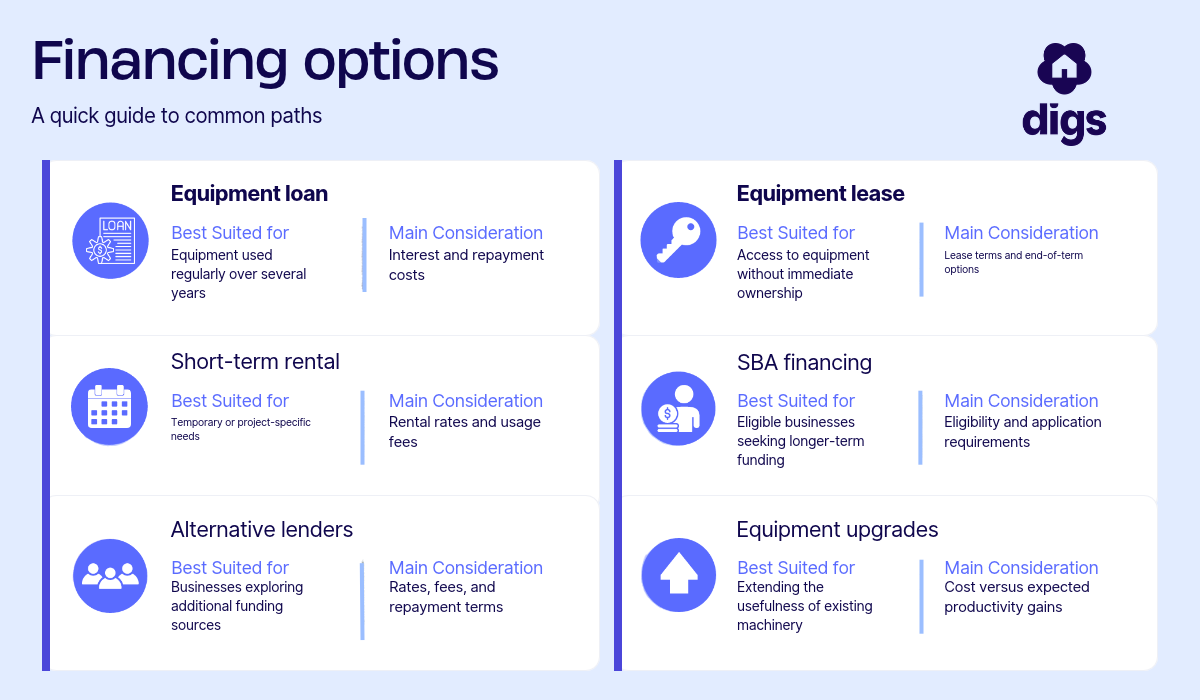
Use the following comparison as a starting point:
Before making a decision, work through these questions:
- How often will you use the equipment? Estimate how many days or hours the machine will be in operation throughout the year.
- How long will you need it? Compare the cost of renting for a specific project against the cost of financing or leasing over a longer period.
- How will the payment affect cash flow? Make sure equipment expenses don't limit your ability to cover payroll, materials, subcontractors, and other operating costs.
- What are the total ownership costs? Account for insurance, fuel, maintenance, repairs, storage, and depreciation where applicable.
- What happens when you no longer need it? Consider resale value, lease-end obligations, and the cost of replacing or upgrading the equipment.
Taking time to compare these factors can help you avoid unnecessary debt, protect working capital, and make equipment investments that support your business.
Frequently Asked Questions About Construction Equipment Financing
What is construction equipment financing?
Construction equipment financing allows builders and contractors to acquire machinery through loans, leases, or other funding arrangements instead of paying the entire purchase price upfront. The right option depends on the equipment, business finances, and expected usage.
What credit score do you need to finance construction equipment?
Credit requirements vary by lender and financing program. Lenders may consider your credit history, business revenue, cash flow, existing debt, time in business, and ability to repay. Some equipment financing companies evaluate the overall financial health of a business rather than relying on credit scores alone.
Is it better to lease or finance construction equipment?
Financing is generally worth considering when you want to own equipment and expect to use it regularly over several years. Leasing may make more sense when you want access to equipment without committing to ownership. Compare the total costs, maintenance responsibilities, and contract terms before deciding.
Can contractors use SBA loans to purchase construction equipment?
Yes. Eligible small businesses can use SBA 7(a) loan proceeds to purchase and install machinery and equipment. Certain equipment purchases may also qualify for SBA 504 financing, provided they meet the program's requirements. Eligibility and loan terms vary.
Can you finance used construction equipment?
Many lenders and equipment financing companies offer financing for used machinery. Approval and terms can depend on the equipment's age, condition, value, expected useful life, and your business's financial qualifications. Compare inspection results and anticipated maintenance costs before purchasing.
Are construction equipment purchases tax deductible?
Eligible business equipment may qualify for depreciation deductions or other tax provisions, depending on the asset, its business use, the acquisition date, and applicable tax rules. Section 179 and bonus depreciation may also apply to qualifying purchases. Talk with a qualified tax professional before making a purchase based on expected tax benefits. The IRS provides current guidance in Publication 946.
Make Equipment Decisions That Support Your Business
Construction equipment is a significant investment. Choosing how to acquire it can affect your cash flow, operating costs, and ability to take on future projects.
Whether you decide to purchase, finance, lease, or rent, look beyond the upfront price. Evaluate how often you'll use the equipment, what it will cost to maintain, and how the commitment fits into your broader business plan.
A well-planned equipment strategy helps you control expenses, avoid unnecessary financial commitments, and keep your construction business ready for the next project.
Digs is an AI-powered collaboration software built for homebuilders. From pre-con to aftercare, it keeps your team, trades, and clients aligned with one centralized workspace for decisions, documentation, digital handoff, and ongoing warranty support.
Unlock a happier home at Digs.com