For many builders, AI still feels like a high-risk, high-disruption bet. New tools promise efficiency, but leadership worries about pushback from teams, steep learning curves, or workflows grinding to a halt during rollout.

High-performing builders are taking a different approach. Instead of ripping out existing processes, they’re layering AI into the work their teams already do, quietly eliminating friction, saving time, and improving accuracy without disrupting the field or the office.
Here’s how they’re doing it.
1. They Start With Pain Points, Not Platforms
The most successful AI adoption doesn’t begin with the question, “What AI tool should we buy?” It starts with, “Where are we losing the most time?”
High-performing builders focus on narrow, high-impact problems such as:
- Manual takeoffs that eat up hours per project
- Rework caused by missed details or outdated plans
- Endless back-and-forth between field and office
- Information living in too many systems
By targeting a specific bottleneck, AI becomes a solution, not a science experiment. Teams feel relief almost immediately, which builds trust instead of resistance.
2. They Use AI to Eliminate Work, Not Add More
One of the biggest mistakes companies make is introducing AI as another thing teams have to manage. High-performing builders do the opposite.
They deploy AI in places where it:
- Automates steps that were previously manual
- Reduces duplicate data entry
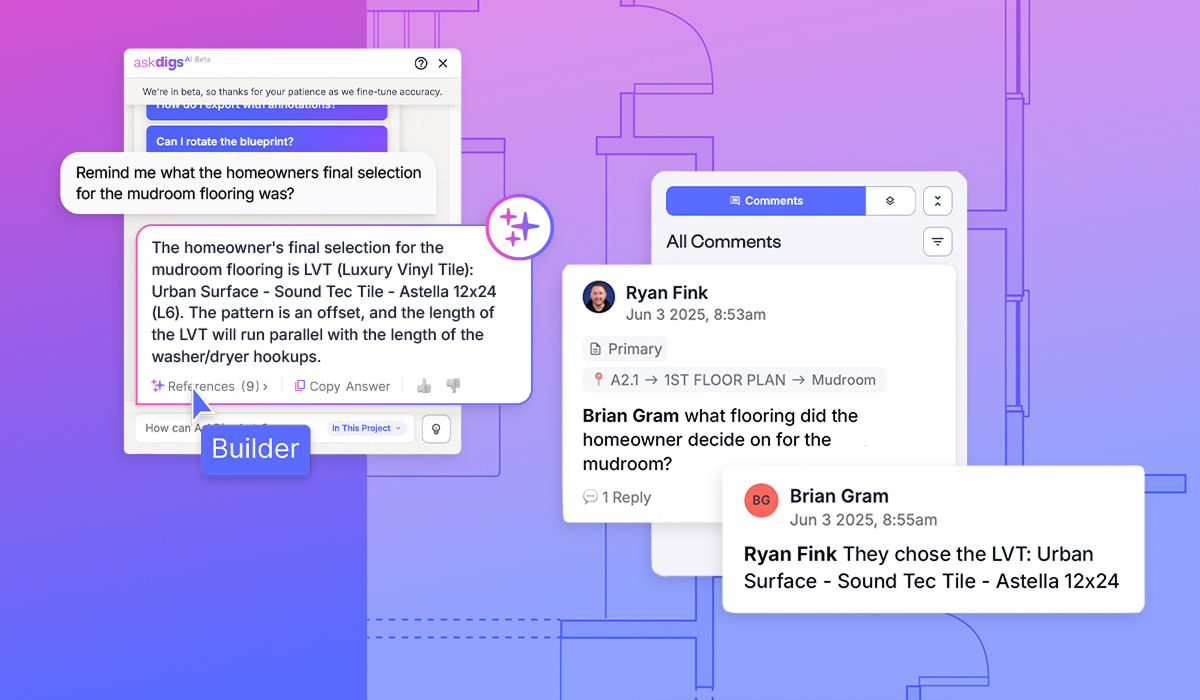
- Answers questions that used to require a phone call or email
When AI removes work rather than adding it, adoption happens naturally. Teams don’t feel like they’re “using AI,” they just notice their day getting easier.
3. People Remain in Charge
Top builders aren’t using AI to replace expertise. They’re using it to support it.
AI handles the repetitive, time-consuming tasks, while people:
- Review and validate outputs
- Make judgment calls
- Focus on coordination, quality, and decision-making
This human-in-the-loop approach preserves trust and accountability. Teams see AI as a tool that enhances their expertise, not a threat to it.
4. They Roll It Out in Small, Low-Risk Phases
Rather than forcing company-wide adoption overnight, high-performing builders:
- Pilot AI with a small group or single workflow
- Measure time saved and errors avoided
- Share wins internally before expanding
These early successes create internal champions. When peers, not leadership, talk about saved hours and fewer headaches, adoption accelerates without mandates.
5. They Choose Tools That Fit Existing Workflows
The least disruptive AI tools are the ones that don’t require teams to completely change how they work.
Builders seeing the most success look for solutions that:
- Work with the plans, files, and systems they already use
- Require minimal training
- Deliver value in minutes, not months
If a tool feels familiar on day one, teams are far more likely to embrace it.
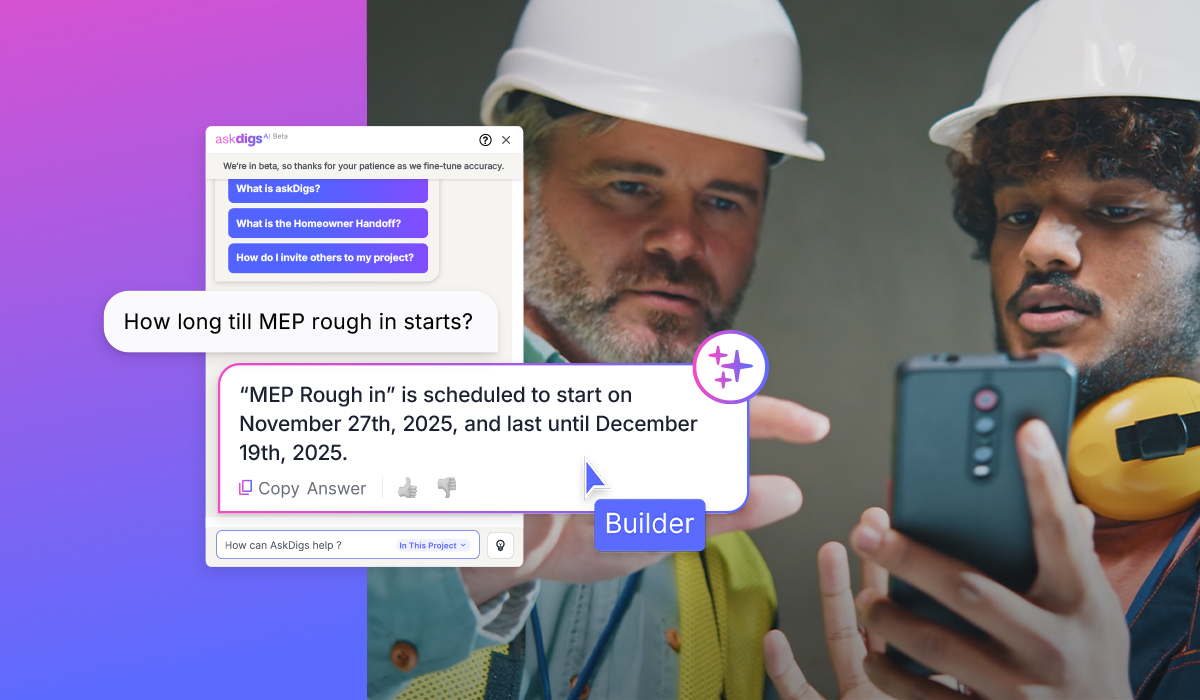
Builders using AskDigs can tap into AI without changing how their teams work. AskDigs acts like a smart assistant, quickly answering questions from the field, pulling information from plans and documents, and flagging potential issues, all while leaving decisions to the people on the job. Teams get the benefits of AI with less back-and-forth, fewer mistakes, and faster access to information, without giving up control or disrupting workflows.

The Real Competitive Advantage
AI isn’t giving high-performing builders an edge because it’s flashy or futuristic. It’s giving them an advantage because it quietly returns something the industry is always short on: time.
Time to build more accurately. Time to reduce rework. Time to focus on what actually moves projects forward.
The builders winning with AI aren’t disrupting their teams, they’re empowering them. In an industry where margins are tight and schedules matter, that difference adds up fast.