The right construction software can help your team spend less time tracking down information and more time keeping projects moving. But adding another tool to your technology stack won't solve much if it doesn't fit the way your team actually builds.
For home builders, successful software implementation starts with understanding where your current workflows fall short, choosing tools that address those gaps, and getting everyone on board. Here's how to approach the process without creating more work for your team.
What Is Construction Software and Why Do Builders Need It?
Construction software helps builders manage the information, people, and processes involved in completing a project. Depending on the solution, it can support scheduling, budgeting, estimating, document management, communication, selections, and project tracking.
For home builders, the goal is to reduce the manual work that slows projects down. When your team can find the right plans, track decisions, coordinate trades, and communicate with clients without digging through emails and disconnected systems, projects become easier to manage.
The right tools can help you:
- Reduce administrative work: Spend less time organizing files, tracking down updates, and following up on outstanding decisions.
- Improve communication: Keep your internal team, trades, and clients working from consistent project information.
- Prevent costly mistakes: Make current plans, specifications, and approvals easier to access.
- Protect project margins: Reduce avoidable rework, miscommunication, and time spent searching for information.
- Improve the homeowner experience: Give clients a clearer picture of project progress and keep important home information organized for handoff.
Construction software isn't about adding technology for the sake of it. It's about giving your team better ways to manage the work they're already doing.

How to Assess Your Construction Software Needs
Before comparing software options, identify the problems you want to solve. Every building company operates differently, so the best solution for another builder might not be the right fit for your team.
Start by looking at where information gets lost, where communication breaks down, and which tasks take more time than they should.
Consider these questions:
- Are project documents spread across email, shared drives, and individual computers?
- Do trades have trouble accessing the latest plans and specifications?
- Are change orders, selections, and approvals difficult to track?
- Does your team spend too much time answering questions or searching for project information?
- Are homeowners regularly asking for updates or clarification?
- Does your current technology make it difficult to manage information after closing?
Look at the entire building process, from pre-construction through the final walk-through and warranty period. A tool might solve one immediate problem but leave other important parts of your workflow disconnected.
Identify your biggest pain points first. Then prioritize the problems that have the greatest impact on your team's time, project costs, and homeowner experience.

How to Choose the Right Construction Software for Your Business
Once you understand your needs, start comparing solutions. Construction software comes in different forms, and not every platform is designed to handle the same responsibilities.
Some tools focus on project management, scheduling, estimating, or accounting. Others focus on document management, collaboration, or homeowner communication.
The goal isn't to find one platform that claims to do everything. It's to build a technology stack that supports your team's workflows without creating unnecessary overlap.
1. Look for Tools Built for Construction
Generic business software can handle basic tasks, but home building has specific requirements.
Your team works with evolving plans, specifications, selections, trade scopes, change orders, approvals, and warranty documentation. Look for software that understands these workflows and makes project information easier to organize and share.
For example, document management software should make it easy to find current plans, share files with trades, and keep important project records accessible. A homeowner-facing platform should make the handoff and ongoing service experience easier to manage.
2. Consider How It Fits Your Existing Technology
Your team probably already uses software for scheduling, estimating, accounting, or project management. Replacing everything isn't always necessary.
Look for solutions that complement your current systems and fill specific gaps. Consider whether information needs to move between platforms, whether your team will have to enter the same details multiple times, and how each tool fits into your existing processes.
Digs, for example, complements project management software by giving builders a centralized place for project collaboration, documentation, and homeowner information.
Rather than creating another disconnected destination for files, Digs helps connect important project information across the building process.
3. Prioritize Ease of Use
Even the most capable software won't deliver much value if your team avoids using it.
Consider who will use the platform every day. Project managers, field teams, office staff, trades, and homeowners may all have different needs and levels of technical experience.
During a demo, look beyond the feature list. Ask to see how common tasks actually work. Can someone find a plan quickly? Can a project manager share an updated document? Can a trade access the information they need without unnecessary steps?
The easier a tool is to use, the easier it is to build consistent habits around it.
4. Evaluate Support, Training, and Scalability
Software implementation doesn't end when you create an account.
Ask about onboarding, training resources, customer support, and what happens when your business grows. You'll also want to understand pricing, user limits, storage, and any additional costs before committing.
A solution should work for your current project volume while giving your team room to grow.

How to Get Your Team On Board With New Construction Technology
Introducing new software can change familiar routines. Some team members may be excited about the switch, while others may prefer the systems they already know.
The best way to encourage adoption is to show your team how the new tool makes their actual work easier.
Start by explaining why you're introducing the software. Be specific about the problems it should solve, whether that's reducing time spent searching for documents, improving communication with trades, or keeping project decisions organized.
A few practical ways to encourage adoption:
- Involve your team early: Ask project managers, field staff, and office employees what they need from the new software.
- Explain the benefits: Show how the tool will improve everyday tasks rather than simply adding another requirement.
- Keep training practical: Use real projects and common workflows instead of relying on feature-by-feature presentations.
- Assign an internal point person: Give employees someone they can go to with questions as they learn the system.
- Make adoption part of the workflow: Establish clear expectations for where information should be stored and how the team should use the platform.
Don't overlook your trades and homeowners, either. If they're expected to interact with the software, make sure the process is straightforward and that they understand how to access the information they need.

How to Implement Construction Software: 5 Steps for Builders
A successful rollout doesn't have to happen all at once. Start with a clear plan, introduce the software in manageable stages, and give your team time to adjust.
Step 1: Set Up Your Software
Begin by configuring the platform around your business and project workflows.
Add the appropriate team members, establish user permissions, and organize the information your team will need. If you're moving from another system, determine which documents, project records, and information should be transferred.
Think through how your team will use the software on a typical project. Establishing consistent organization and naming conventions early can prevent confusion later.
Step 2: Train Your Team
Give employees the training they need to feel comfortable using the new system.
Focus on the tasks they'll perform most often. For a project manager, that might mean organizing project documents and sharing updates. For a field team member, it could mean finding the latest plan set or checking an approved change.
Keep sessions short and hands-on. Give people time to practice with real project information, and make sure they know where to go when questions come up.
Step 3: Start With a Trial Project
Before introducing the software across your entire operation, test it on one project or a specific phase of construction.
Choose a project that gives you a good opportunity to evaluate the tool. For example, you might use it to organize plans and specifications, coordinate selections and approvals, or improve communication between your office and field teams.
Pay attention to what works and what creates friction. A trial gives you the opportunity to make adjustments before expanding the rollout.
Step 4: Gather Feedback and Make Adjustments
Check in with the people using the software regularly.
Ask what's working, what's confusing, and where the tool could better support their day-to-day responsibilities. Look for repeated questions, workarounds, or tasks employees are still completing outside the platform.
If the same information is being entered in multiple places, revisit your workflows. If team members aren't using a particular feature, determine whether they need additional training or whether it isn't relevant to their role.
Use that feedback to refine your processes before rolling the software out to additional projects.
Step 5: Monitor Results and Expand Adoption
Once the initial project is running smoothly, expand the implementation to the rest of your team.
Measure whether the software is helping solve the problems you identified at the beginning. Depending on your goals, useful indicators might include:
- Time spent searching for project documents.
- Delays caused by missing information or approvals.
- Repeated questions from trades or homeowners.
- Time spent organizing closeout and handoff documentation.
- Team adoption and consistency across projects.
Review these measures periodically. As your business grows and workflows change, your technology needs may change, too.
How Construction Software Supports Better Building Outcomes
The value of construction software goes beyond keeping project information organized. The right tools can help your team work more efficiently throughout the entire building process.
When plans, specifications, selections, approvals, and project updates are connected, everyone has a clearer picture of what's happening and what needs attention.
For builders, that means fewer communication gaps, less time spent tracking down information, and better coordination between the office, field, and trades.
It also creates a stronger foundation for the homeowner experience. When important project information is organized throughout construction, your team has a better starting point for the final handoff and ongoing warranty support.
This is where a connected technology stack matters. Project management software can help coordinate schedules and tasks, while collaboration and documentation tools keep the information behind those tasks accessible to the people who need it.
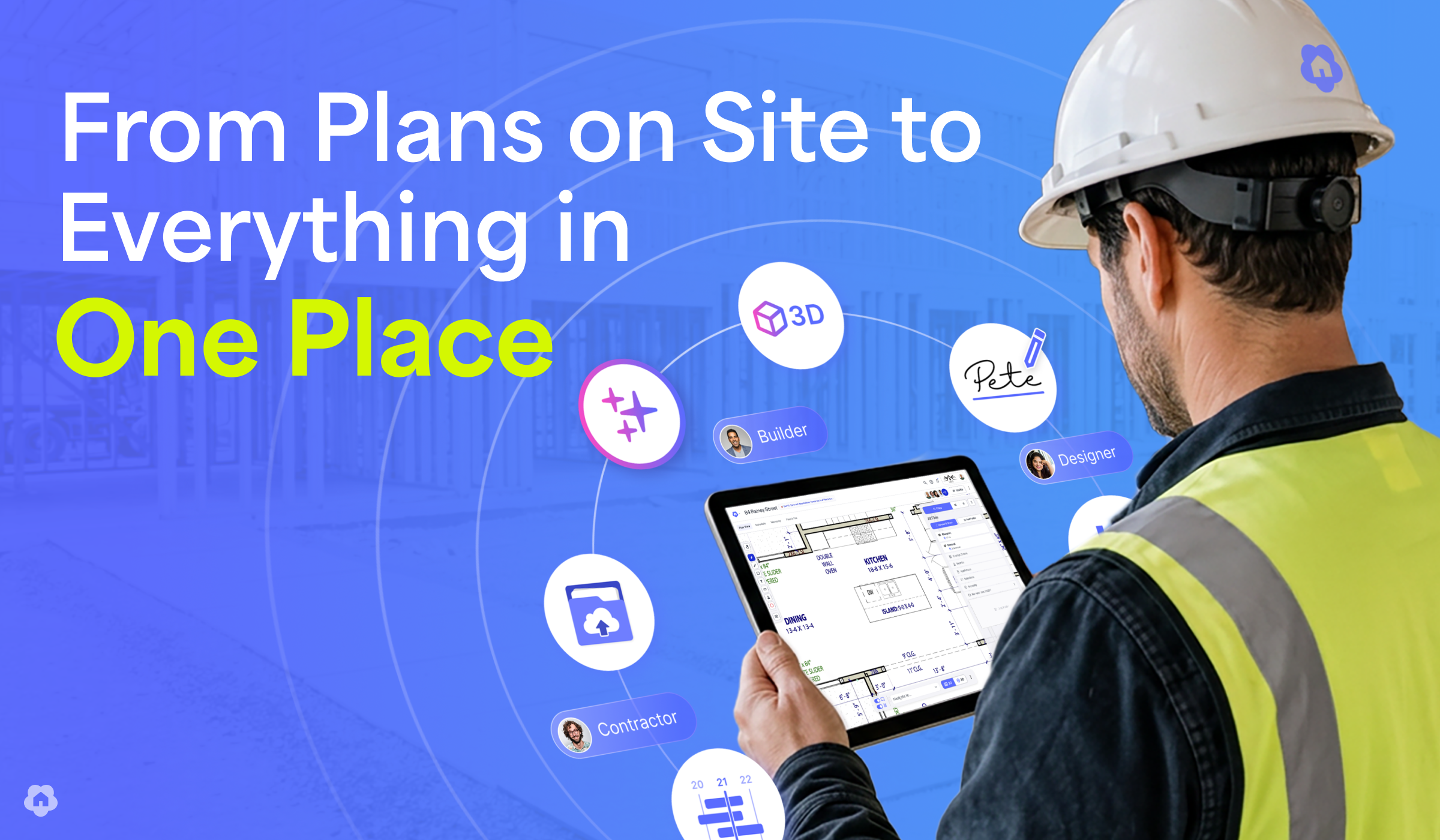
Digs brings these pieces together with an AI-powered collaboration platform built specifically for home builders. From pre-construction through aftercare, Digs helps keep project information, documentation, and communication connected in one centralized workspace.
The goal is simple: less time chasing information, fewer gaps between teams, and a better experience for everyone involved.
Frequently Asked Questions About Construction Software
What is the best construction software for home builders?
The best construction software depends on your business needs and workflows. Some builders need stronger project management and scheduling tools, while others need better document management, trade collaboration, or homeowner communication. Start by identifying your biggest operational gaps and comparing platforms based on how well they address them.
How much does construction software cost?
Construction software pricing varies depending on the platform, features, number of users, and project volume. Some providers charge monthly or annual subscription fees, while others offer custom pricing based on business size and requirements. Compare the full cost of ownership, including implementation, training, and additional user fees.
How long does it take to implement construction software?
Implementation time depends on the software, the size of your team, the amount of information being transferred, and how complex your existing workflows are. A focused rollout on one project or team can help you identify issues before expanding adoption across your business.
Can construction software work alongside existing project management tools
Yes. Many construction technology tools serve different purposes and can complement one another. For example, project management software can help coordinate schedules and tasks, while a collaboration platform like Digs helps organize project documentation, connect information, and support communication with trades and homeowners.
What should builders look for when choosing construction software?
Look for software that addresses your specific business needs, fits your existing workflows, and is easy for your team to use. Consider document management, collaboration, reporting, integrations, customer support, training, pricing, and the ability to scale as your business grows.
Digs is an AI-powered collaboration software built for homebuilders. From pre-con to aftercare, it keeps your team, trades, and clients aligned with one centralized workspace for decisions, documentation, digital handoff, and ongoing warranty support.
Unlock a happier home at Digs.com